


4. 网络编程
4.1 阻塞模式
单线程模式下,阻塞方法之间存在互相影响
- ServerSocketChannel.accept() 方法会在没有连接建立时阻塞
- SocketChannel.read() 在没有可读数据时阻塞
Sever
package com.sw.netty._04.block;

import lombok.extern.slf4j.Slf4j;

import java.io.IOException;
import java.net.InetSocketAddress;
import java.nio.ByteBuffer;
import java.nio.channels.ServerSocketChannel;
import java.nio.channels.SocketChannel;
import java.util.ArrayList;
import java.util.List;

import static utils.ByteBufferUtil.debugAll;

@Slf4j
public class Server {
    public static void main(String[] args) throws IOException {
        ByteBuffer bf = ByteBuffer.allocate(16);
        ServerSocketChannel ssc = ServerSocketChannel.open();
        ssc.bind(new InetSocketAddress(8088));
        List<SocketChannel> channelList = new ArrayList<>();
        while (true) {
            log.info("connecting...");
            SocketChannel channel = ssc.accept();
            log.info("connected - [{}]", channel);
            channelList.add(channel);
            for (SocketChannel sc : channelList) {
                log.info("before read - [{}]", channel);
                sc.read(bf);
                bf.flip();
                debugAll(bf);
                bf.clear();
                log.info("after read - [{}]", channel);
            }
        }
    }
}
Client
package com.sw.netty._04.block;

import lombok.extern.slf4j.Slf4j;

import java.io.IOException;
import java.net.InetSocketAddress;
import java.nio.channels.SocketChannel;

@Slf4j
public class Client {
    public static void main(String[] args) throws IOException {
        SocketChannel sc = SocketChannel.open();
        sc.connect(new InetSocketAddress("localhost", 8088));
        log.info("waiting...");
    }
}
4.2 非阻塞模式
非阻塞模式下,相关方法的线程不会阻塞
- ServerSocketChannel.accept() 方法会在没有连接建立时返回 null,继续运行
- SocketChannel.read() 在没有可读数据时返回 0
- 写数据时,数据写入 Channel 后,线程即可继续运行,无需等待 Channel 通过网络把数据发送出去或发送完
但非阻塞模式下,即使没有新的连接建立、可读数据,线程仍在运行;且数据复的制过程线程是阻塞的
Sever
package com.sw.netty._04.nonBlock;

import lombok.extern.slf4j.Slf4j;

import java.io.IOException;
import java.net.InetSocketAddress;
import java.nio.ByteBuffer;
import java.nio.channels.ServerSocketChannel;
import java.nio.channels.SocketChannel;
import java.util.ArrayList;
import java.util.List;

import static utils.ByteBufferUtil.debugAll;

@Slf4j
public class Server {
    public static void main(String[] args) throws IOException {
        ByteBuffer bf = ByteBuffer.allocate(16);
        ServerSocketChannel ssc = ServerSocketChannel.open();
        // 切换为非阻塞模式
        ssc.configureBlocking(false);
        ssc.bind(new InetSocketAddress(8088));
        List<SocketChannel> channelList = new ArrayList<>();
        while (true) {
            SocketChannel channel = ssc.accept();
            if (channel != null) {
                log.info("connected - [{}]", channel);
                // 切换为非阻塞模式
                channel.configureBlocking(false);
                channelList.add(channel);
            }
            for (SocketChannel sc : channelList) {
                if (sc.read(bf) > 0) {
                    bf.flip();
                    debugAll(bf);
                    bf.clear();
                    log.info("after read - [{}]", channel);
                }
            }
        }
    }
}
Client
package com.sw.netty._04.nonBlock;

import lombok.extern.slf4j.Slf4j;

import java.io.IOException;
import java.net.InetSocketAddress;
import java.nio.channels.SocketChannel;

@Slf4j
public class Client {
    public static void main(String[] args) throws IOException {
        SocketChannel sc = SocketChannel.open();
        sc.connect(new InetSocketAddress("localhost", 8088));
        log.info("waiting...");
    }
}
4.3 多路复用
概念:单线程配合 Selector 完成对多个 Channel 可读、可写事件的监听
- 仅针对网络 IO、文件 IO 操作无法使用多路复用
Selector 的作用:
- 有可连接事件时建立连接
- 有可读事件时执行读取操作
- 有可写事件时执行写入操作
注:Channel 不一定时时可写,当 Channel 可写时,则会触发 Selector 的可写事件
4.4 Selector
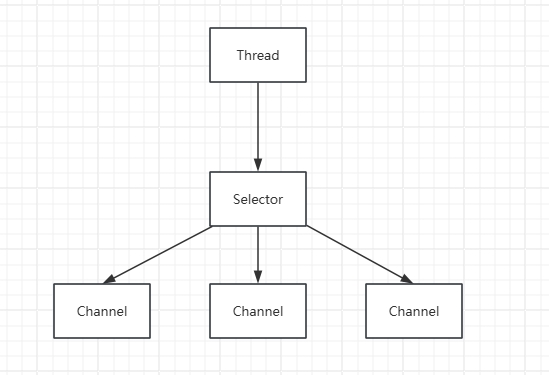
与 Selector 协作的线程可以监听多个 Channel,当事件发生时才去处理对应的事件,此时的线程可被充分利用,同时也节约的线程的数量,减少了线程间的上下文切换
(1)创建
Selector selector = Selector.open();(2)绑定 Channel 事件(注册)
Selector selector = Selector.open();
ServerSocketChannel ssc = ServerSocketChannel.open();
// 切换为非阻塞模式
ssc.configureBlocking(false);

// 注册 Channel
SelectionKey sscKey = ssc.register(selector, 0, null);
注:
- Channel 必须以非阻塞模式运行
绑定的事件类型如下:
- accept:有连接请求时触发
- connection:(客户端)连接建立后触发
- read:读事件
- write:写事件
(3)监听 Channel 事件
// 方式一:阻塞直到绑定事件发生
int count = selector.select();

// 方式二:阻塞到超时时间(ms)或绑定事件发生
int count = selector.select(long timeout);

// 方式三:selector 立即返回,后续流程根据返回值检查是否有事件发生
int count = selector.selectNow();
(4)selector 何时不阻塞
发生对应事件时:
- accept 事件 - 客户端发起连接请求
- read 事件 - 客户端发送数据、正常/异常关闭(当客户端发送的数据过大,服务端无法一次处理完时,会触发多次读取事件)
- write 事件 - channel 当前状态可写出数据
- 调用 selector.wakeup()
- 调用 selector.close()
- selector 所在的线程中断
4.5 处理 accept 事件
package com.sw.netty._04.selector;

import lombok.extern.slf4j.Slf4j;

import java.io.IOException;
import java.net.InetSocketAddress;
import java.nio.ByteBuffer;
import java.nio.channels.*;
import java.util.ArrayList;
import java.util.Iterator;
import java.util.List;

import static utils.ByteBufferUtil.debugAll;

@Slf4j
public class Server {
    public static void main(String[] args) throws IOException {
        // 1. Selector
        Selector selector = Selector.open();

        ByteBuffer bf = ByteBuffer.allocate(16);
        ServerSocketChannel ssc = ServerSocketChannel.open();
        // 切换为非阻塞模式
        ssc.configureBlocking(false);

        // 2. 注册 Channel
        /**
         * 通过 SelectionKey,可以知道发生的事件和发生事件的 Channel
         * 事件类型:
         * accept:有连接请求时触发
         * connection:(客户端)连接建立后触发
         * read:读事件
         * write:写事件
         */
        SelectionKey sscKey = ssc.register(selector, 0, null);
        // sscKey 只关注 accept 事件
        sscKey.interestOps(SelectionKey.OP_ACCEPT);
        log.info("register channel key-[{}]", sscKey);

        ssc.bind(new InetSocketAddress(8088));
        while (true) {
            // 3. select 方法,没有事件发生或事件取消时,线程阻塞,否则反之
            selector.select();

            // 4. 处理事件
            Iterator<SelectionKey> iterator = selector.selectedKeys().iterator();
            while (iterator.hasNext()) {
                SelectionKey key = iterator.next();
                // 处理完事件后,需要显式删除对应的key(事件处理完了,但 Selector 不会删除对应的key)
                iterator.remove();

                // 5. 区分事件类型
                if (key.isAcceptable()) {
                    log.info("Deal Accept Event");
                    ServerSocketChannel channel = (ServerSocketChannel) key.channel();
                    SocketChannel sc = channel.accept();
                    sc.configureBlocking(false);
                    SelectionKey scKey = sc.register(selector, 0, null);
                    scKey.interestOps(SelectionKey.OP_READ);
                }
            }
        }
    }
}
注:当事件发生后,要么处理,要么取消,如果什么都不做,下次该事件还会触发
4.6 处理 read 事件
(1)演示 Demo
package com.sw.netty._04.selector;

import lombok.extern.slf4j.Slf4j;

import java.io.IOException;
import java.net.InetSocketAddress;
import java.nio.ByteBuffer;
import java.nio.channels.*;
import java.util.ArrayList;
import java.util.Iterator;
import java.util.List;

import static utils.ByteBufferUtil.debugAll;

@Slf4j
public class Server {
    public static void main(String[] args) throws IOException {
        // 1. Selector
        Selector selector = Selector.open();

        ByteBuffer bf = ByteBuffer.allocate(16);
        ServerSocketChannel ssc = ServerSocketChannel.open();
        // 切换为非阻塞模式
        ssc.configureBlocking(false);

        // 2. 注册 Channel
        /**
         * 通过 SelectionKey,可以知道发生的事件和发生事件的 Channel
         * 事件类型:
         * accept:有连接请求时触发
         * connection:(客户端)连接建立后触发
         * read:读事件
         * write:写事件
         */
        SelectionKey sscKey = ssc.register(selector, 0, null);
        // sscKey 只关注 accept 事件
        sscKey.interestOps(SelectionKey.OP_ACCEPT);
        log.info("register channel key-[{}]", sscKey);

        ssc.bind(new InetSocketAddress(8088));
        while (true) {
            // 3. select 方法,没有事件发生或事件取消时,线程阻塞,否则反之
            selector.select();

            // 4. 处理事件
            Iterator<SelectionKey> iterator = selector.selectedKeys().iterator();
            while (iterator.hasNext()) {
                SelectionKey key = iterator.next();
                // 处理完事件后,需要显式删除对应的key(事件处理完了,但 Selector 不会删除对应的key)
                iterator.remove();

                // 5. 区分事件类型
                if (key.isAcceptable()) {
                    log.info("Deal Accept Event");
                    ServerSocketChannel channel = (ServerSocketChannel) key.channel();
                    SocketChannel sc = channel.accept();
                    sc.configureBlocking(false);
                    SelectionKey scKey = sc.register(selector, 0, null);
                    scKey.interestOps(SelectionKey.OP_READ);
                }

                if (key.isReadable()) {
                    try {
                        log.info("Deal Read Event");
                        SocketChannel channel = (SocketChannel) key.channel();
                        ByteBuffer readBf = ByteBuffer.allocate(16);
                        if (-1 != channel.read(readBf)) {
                            readBf.flip();
                            debugAll(readBf);
                        } else {
                            // 处理客户端读事件结束,正常断开
                            log.info("Client - [{}] close", key);
                            key.cancel();
                        }
                    } catch (IOException e) {
                        // 对发生异常的事件取消注册(从 Selector key 集合中移除)
                        // 如:客户端关闭主动断开连接
                        key.cancel();
                        e.printStackTrace();
                    }
                }
            }
        }
    }
}
(2)iterator.remove() 解释
当 selector 事件发生后,会将对应的 key 存入 selectedKeys 集合,但在事件处理完后并不会删除对应的 key,需要显式删除处理,如:第一次触发 accept 事件,处理完后,下一次循环再进来,key.isAcceptable() 判断为真,进入对应的判断后 channel.accept() 值为空(此时并不是 accept 事件),触发空指针异常
(3)cancel 的作用
取消注册在 selector 上的 channel,并从 SelectionKeys 集合中删除对应的事件 key
4.7 处理消息边界
- 固定消息长度(数据包大小一样),但是在一定程度上会浪费带宽
- 按分隔符拆分,效率低
TLV 格式,即:Type 类型、Length 长度、Value 数据,在消息类型和长度已知的情况下,就可以方便的获取消息的大小,以此分配 buffer;需要提前分配 buffer,如果内容过大,会对 server 的吞吐量造成影响
- HTTP 1.0 TLV 格式
- HTTP 2.0 LTV 格式
(1)此处以按分隔符拆分为例:
Server
package com.sw.netty._04.msgBoundary;

import lombok.extern.slf4j.Slf4j;

import java.io.IOException;
import java.net.InetSocketAddress;
import java.nio.ByteBuffer;
import java.nio.channels.SelectionKey;
import java.nio.channels.Selector;
import java.nio.channels.ServerSocketChannel;
import java.nio.channels.SocketChannel;
import java.util.Iterator;

import static utils.ByteBufferUtil.debugAll;

@Slf4j
public class Server {
    public static void main(String[] args) throws IOException {
        // 1. Selector
        Selector selector = Selector.open();

        ByteBuffer bf = ByteBuffer.allocate(16);
        ServerSocketChannel ssc = ServerSocketChannel.open();
        // 切换为非阻塞模式
        ssc.configureBlocking(false);

        // 2. 注册 Channel
        /**
         * 通过 SelectionKey,可以知道发生的事件和发生事件的 Channel
         * 事件类型:
         * accept:有连接请求时触发
         * connection:(客户端)连接建立后触发
         * read:读事件
         * write:写事件
         */
        SelectionKey sscKey = ssc.register(selector, 0, null);
        // sscKey 只关注 accept 事件
        sscKey.interestOps(SelectionKey.OP_ACCEPT);
        log.info("register channel key-[{}]", sscKey);

        ssc.bind(new InetSocketAddress(8088));
        while (true) {
            // 3. select 方法,没有事件发生或事件取消时,线程阻塞,否则反之
            selector.select();

            // 4. 处理事件
            Iterator<SelectionKey> iterator = selector.selectedKeys().iterator();
            while (iterator.hasNext()) {
                SelectionKey key = iterator.next();
                // 处理完事件后,需要显式删除对应的key(事件处理完了,但 Selector 不会删除对应的key)
                iterator.remove();

                // 5. 区分事件类型
                if (key.isAcceptable()) {
                    log.info("Deal Accept Event");
                    ServerSocketChannel channel = (ServerSocketChannel) key.channel();
                    SocketChannel sc = channel.accept();
                    sc.configureBlocking(false);

                    ByteBuffer readBf = ByteBuffer.allocate(16);
                    // 将 readBf 作为附件关联到事件 key 上
                    // 将 readBf 的生命周期提升到与 SelectionKey 平级
                    SelectionKey scKey = sc.register(selector, 0, readBf);
                    scKey.interestOps(SelectionKey.OP_READ);
                }

                if (key.isReadable()) {
                    try {
                        log.info("Deal Read Event");
                        SocketChannel channel = (SocketChannel) key.channel();
                        ByteBuffer readBf = (ByteBuffer) key.attachment();
                        if (-1 != channel.read(readBf)) {
                            split(readBf);

                            // 当传输的内容超过 readbf 初始容量时,需进行扩容
                            if (readBf.position() == readBf.limit()) {
                                ByteBuffer newReadBf = ByteBuffer.allocate(readBf.capacity() * 2);
                                readBf.flip();
                                newReadBf.put(readBf);
                                key.attach(newReadBf);
                            }
                        } else {
                            // 处理客户端读事件结束,正常断开
                            log.info("Client - [{}] close", key);
                            key.cancel();
                        }
                    } catch (IOException e) {
                        // 对发生异常的事件取消注册(从 Selector key 集合中移除)
                        // 如:客户端关闭主动断开连接
                        key.cancel();
                        e.printStackTrace();
                    }
                }
            }
        }
    }

    private static void split(ByteBuffer source) {
        source.flip();
        for (int i = 0; i < source.limit(); i++) {
            if ('\n' == source.get(i)) {
                int length = i + 1 - source.position();
                ByteBuffer target = ByteBuffer.allocate(length);
                // 从 source 读,向 target 写
                for (int j = 0; j < length; j++) {
                    target.put(source.get());
                }
                debugAll(target);
            }
        }

        // 此处不使用 clear,需使用 compact 将剩余未读的部分向前移动
        source.compact();
    }
}
Client
package com.sw.netty._04.msgBoundary;

import lombok.extern.slf4j.Slf4j;

import java.io.IOException;
import java.net.InetSocketAddress;
import java.nio.channels.SocketChannel;
import java.nio.charset.Charset;

@Slf4j
public class Client {
    public static void main(String[] args) throws IOException {
        SocketChannel sc = SocketChannel.open();
        sc.connect(new InetSocketAddress("localhost", 8088));
        sc.write(Charset.defaultCharset().encode("012\n0123456789abcdefyao\n"));
        sc.write(Charset.defaultCharset().encode("0123456789abcdefsunxiaochuan\nyaoshuige\n"));
        sc.close();
    }
}
4.8 ByteBuffer 大小分配
- 每个 Channel 都需要记录可能被切分的消息,因为 ByteBuffer 不能被多个 Channel 共享,需要独立维护
ByteBuffer 不能太大,需要可变:
- 思路一:先分配一个小的 buffer,不够的时候再进行扩容,优点是消息连续存储,缺点是数据拷贝存在一定的性能损耗
- 思路二:用数组维护 buffer,可以避免数据拷贝产生的性能损耗,但消息存储不连续
4.9 处理 write 事件
此处以写入内容过多问题(一次性发送数据)为例:
Server
package com.sw.netty._04.writeableEvents;

import java.io.IOException;
import java.net.InetSocketAddress;
import java.nio.ByteBuffer;
import java.nio.channels.SelectionKey;
import java.nio.channels.Selector;
import java.nio.channels.ServerSocketChannel;
import java.nio.channels.SocketChannel;
import java.nio.charset.Charset;
import java.util.Iterator;
import java.util.UUID;

public class Server {
    public static void main(String[] args) throws IOException {
        ServerSocketChannel ssc = ServerSocketChannel.open();
        ssc.configureBlocking(false);

        Selector selector = Selector.open();
        ssc.register(selector, SelectionKey.OP_ACCEPT);

        ssc.bind(new InetSocketAddress(8088));
        while (true) {
            selector.select();
            Iterator<SelectionKey> iterator = selector.selectedKeys().iterator();
            while (iterator.hasNext()) {
                SelectionKey key = iterator.next();
                iterator.remove();

                if (key.isAcceptable()) {
                    SocketChannel sc = ssc.accept();
                    sc.configureBlocking(false);

                    // 1. 向客户端发送大量数据
                    StringBuilder sb = new StringBuilder();
                    for (int i = 0; i < 999999; i++) {
                        sb.append(UUID.randomUUID().toString().replace("-", ""));
                    }

                    ByteBuffer bf = Charset.defaultCharset().encode(sb.toString());
                    while (bf.hasRemaining()) {
                        int write = sc.write(bf);
                        System.out.println("发送:" + write + " 字节数据");
                    }
                }
            }
        }
    }
}
Client
package com.sw.netty._04.writeableEvents;

import java.io.IOException;
import java.net.InetSocketAddress;
import java.nio.ByteBuffer;
import java.nio.channels.SocketChannel;

public class Client {
    public static void main(String[] args) throws IOException {
        SocketChannel sc = SocketChannel.open();
        sc.connect(new InetSocketAddress("localhost", 8088));

        int count = 0;
        while (true) {
            ByteBuffer bf = ByteBuffer.allocate(1024 * 1024);
            count += sc.read(bf);
            System.out.println("接收到:" + count + " 字节数据");
        }
    }
}
改进优化:
Server
package com.sw.netty._04.writeableEvents;

import java.io.IOException;
import java.net.InetSocketAddress;
import java.nio.ByteBuffer;
import java.nio.channels.SelectionKey;
import java.nio.channels.Selector;
import java.nio.channels.ServerSocketChannel;
import java.nio.channels.SocketChannel;
import java.nio.charset.Charset;
import java.util.Iterator;
import java.util.UUID;

public class Server {
    public static void main(String[] args) throws IOException {
        ServerSocketChannel ssc = ServerSocketChannel.open();
        ssc.configureBlocking(false);

        Selector selector = Selector.open();
        ssc.register(selector, SelectionKey.OP_ACCEPT);

        ssc.bind(new InetSocketAddress(8088));
        while (true) {
            selector.select();
            Iterator<SelectionKey> iterator = selector.selectedKeys().iterator();
            while (iterator.hasNext()) {
                SelectionKey key = iterator.next();
                iterator.remove();

                if (key.isAcceptable()) {
                    SocketChannel sc = ssc.accept();
                    sc.configureBlocking(false);
                    SelectionKey scKey = sc.register(selector, 0, null);
                    scKey.interestOps(SelectionKey.OP_READ);

                    // 1. 向客户端发送大量数据
                    StringBuilder sb = new StringBuilder();
                    for (int i = 0; i < 999999; i++) {
                        sb.append(UUID.randomUUID().toString().replace("-", ""));
                    }

                    ByteBuffer bf = Charset.defaultCharset().encode(sb.toString());
                    int write = sc.write(bf);
                    System.out.println("OP_READ - 发送:" + write + " 字节数据");

                    // 2. 判断是否有剩余内容
                    if (bf.hasRemaining()) {
                        // 3. 关注可写事件(在原关注事件的基础上,需额外关注写事件)
                        scKey.interestOps(scKey.interestOps() + SelectionKey.OP_WRITE);
                        // scKey.interestOps(scKey.interestOps() | SelectionKey.OP_WRITE);
                        // 4. 将未写完的数据挂载到 scKey 上
                        scKey.attach(bf);
                    }
                }

                if (key.isWritable()) {
                    ByteBuffer bf = (ByteBuffer) key.attachment();
                    SocketChannel sc = (SocketChannel) key.channel();
                    int write = sc.write(bf);
                    System.out.println("OP_WRITE - 发送:" + write + " 字节数据");

                    // 5. 关闭资源
                    if (!bf.hasRemaining()) {
                        // 清除挂载的 buffer
                        key.attach(null);

                        // 清除关注的事件
                        key.interestOps(key.interestOps() - SelectionKey.OP_WRITE);
                    }
                }
            }
        }
    }
}
注:当 channel 发送数据,且 socket 缓冲区可写时,对应的事件会频繁发生,故需要在 socket 缓冲区写不下时再关注写事件,写完之后需要取消关注
Client
package com.sw.netty._04.writeableEvents;

import lombok.extern.slf4j.Slf4j;

import java.io.IOException;
import java.net.InetSocketAddress;
import java.nio.ByteBuffer;
import java.nio.channels.SelectionKey;
import java.nio.channels.Selector;
import java.nio.channels.SocketChannel;
import java.util.Iterator;

@Slf4j
public class Client {
    public static void main(String[] args) throws IOException {
        Selector selector = Selector.open();
        SocketChannel sc = SocketChannel.open();
        sc.configureBlocking(false);
        sc.register(selector, SelectionKey.OP_CONNECT | SelectionKey.OP_READ);
        sc.connect(new InetSocketAddress("localhost", 8088));

        int count = 0;
        while (true) {
            selector.select();
            Iterator<SelectionKey> iterator = selector.selectedKeys().iterator();
            while (iterator.hasNext()) {
                SelectionKey key = iterator.next();
                iterator.remove();

                if (key.isConnectable()) {
                    log.info("key [{}] connected", key);
                    sc.finishConnect();
                }

                if (key.isReadable()) {
                    ByteBuffer bf = ByteBuffer.allocate(1024 * 1024);
                    count += sc.read(bf);
                    bf.clear();
                    System.out.println("接收到:" + count + " 字节数据");
                }
            }
        }
    }
}


评论 (0)